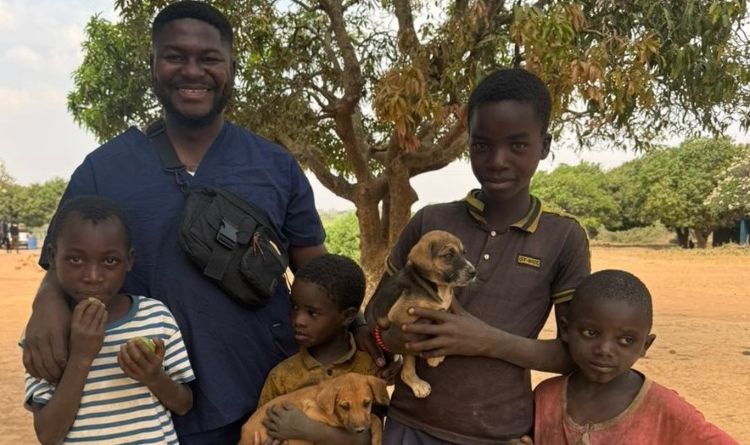
The Veterinary Association of Zambia (VAZ) has received a technical report documenting a multi-district rabies emergency response carried out between September 2025 and July 2026 under a One Health public–private partnership. The response was initiated and coordinated by Noah's Ark Veterinary Services (NAVS), a private veterinary practice, at the request of the Nyimba District Administration. The intervention followed the death of a two-year-old child in Nyimba District, Eastern Province, in September 2025. The child had been admitted to a local health facility after a dog bite, but treatment was discontinued in favour of traditional healing. The child later died, and brain tissue collected at post-mortem was laboratory-confirmed positive for rabies. Livestock rabies cases were documented in the same district.
What was achieved
Working across three provinces, the partnership mobilised approximately 8,000 rabies vaccine doses, more than 3,000 needles and syringes, and ZMW 90,000 in operational support funds. Vaccination, community sensitisation and surveillance activities were delivered in Nyimba, Lusaka, Chongwe and Itezhi-Tezhi districts. Nyimba District: 5,000 doses mobilised and delivered in phases to the Central 1, Central 2 and Chipembe veterinary camps, supported by district stakeholder and One Health coordination meetings, community awareness planning, vaccination team mobilisation and digital vaccination data training. Field implementation was progressing at the time of reporting. Lusaka and Chongwe Districts: more than 2,000 animals vaccinated across over 15 communities, in collaboration with the Lusaka Animal Welfare Society and veterinary students. Notably, 95.5% were first-time vaccinations — evidence that the campaign reached dog populations never previously covered. Itezhi-Tezhi District: 500 doses deployed in partnership with Game Rangers International, which provided field personnel, vaccination materials and logistics. A total of 391 animals were vaccinated (305 dogs and 86 cats) across 12 communities at the human–wildlife interface, achieving approximately 80% of the planned target.Why it matters.
Rabies is almost invariably fatal once clinical signs appear, yet it is entirely preventable through dog vaccination and prompt post-exposure care. Zambia recorded approximately 30,000 dog bite cases and 43 confirmed human rabies deaths in 2025 (ZNPHI). Africa accounts for an estimated 24,000 of the roughly 55,000 rabies deaths reported globally each year. Children in rural communities carry the heaviest burden, and poverty compounds the risk: 78.8% of Zambia's rural population lives below the national poverty line, limiting access to routine veterinary care and to timely post-exposure prophylaxis. The disease is also a conservation threat. In early 2020, an entire pack of 17 African wild dogs (Lycaon pictus) was lost to rabies in Kafue National Park. Molecular analysis of samples from that outbreak showed close genetic similarity to a rabies virus isolated from a domestic dog in Southern Province, consistent with published Zambian studies indicating that wildlife rabies here is predominantly spill-over from unvaccinated domestic dogs. Domestic dogs remain the principal maintenance host for the virus in Zambia, which is why mass dog vaccination — rather than wildlife vaccination — remains the most cost-effective route to protecting both people and endangered carnivores. A partnership model that worked The response drew together the Office of the President, the Ministry of Fisheries and Livestock through the Department of Veterinary Services, the National Livestock Disease Epidemiology and Information Centre (NALEIC), the Zambia National Public Health Institute (ZNPHI), the Department of National Parks and Wildlife, district administrations and traditional leadership, the Veterinary Association of Zambia, the University of Zambia School of Veterinary Medicine, Mission Rabies, the Lusaka Animal Welfare Society, Game Rangers International, Nyamvu Safaris Limited and the Food and Agriculture Organization. Implementation was not without difficulty. The report records short vaccine shelf-life requiring accelerated deployment, delays in fund disbursement, logistical and transport constraints, variable district reporting timelines, difficulties with digital vaccination data entry, limited district operational resources, and community misconceptions about rabies vaccination. Activities continued through adaptive planning and close coordination between partners.
What VAZ takes from this
The report sets out six recommendations for national scale-up: Institutionalise annual mass dog vaccination campaigns in interface districts; Strengthen district surveillance and digital reporting systems, with sustained technical support; Expand community education programmes on rabies prevention and responsible pet ownership; Develop sustainable financing mechanisms for rabies control; Promote routine collaboration between the veterinary, wildlife and human health sectors; and Expand operational public–private partnership models nationally.For veterinary professionals, the practical lesson is that early engagement of district leadership and clearly defined reporting structures materially improve emergency implementation, that community sensitisation directly increases vaccination uptake, and that existing conservation partnerships can be converted into functioning public health delivery channels. For the public, the message is simpler: vaccinate your dogs and seek medical attention immediately after any dog bite. The experience documented in Nyimba, Lusaka, Chongwe and Itezhi-Tezhi provides a practical, tested framework for scaling rabies control as Zambia works towards the global goal of eliminating dog-mediated human rabies deaths.
Note to readers: This news item summarises NAVS Technical Report No. 0017, “Operationalising a One Health Public–Private Partnership for Rabies Control at the Human–Wildlife–Domestic Animal Interface in Zambia”, prepared for the Veterinary Association of Zambia and covering the period September 2025 to July 2026.